
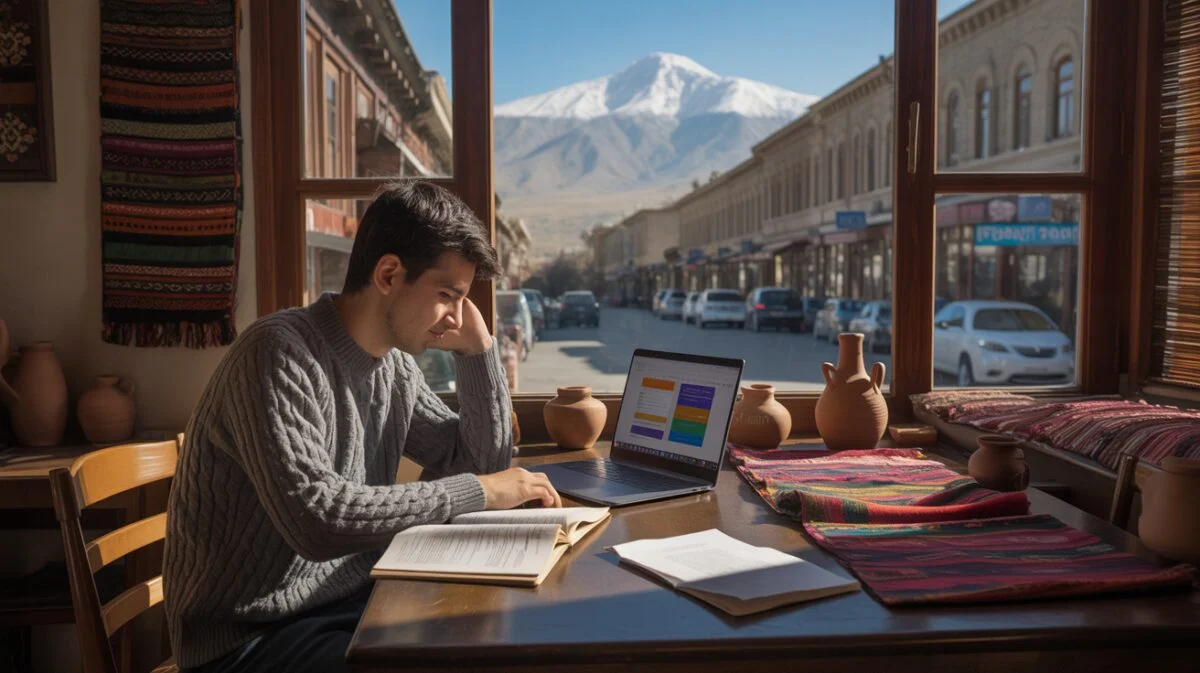

What Is an Armenia Studies Visa?
The Armenia Studies Visa (V-4) is an entry authorization for foreign nationals enrolling in accredited Armenian educational institutions. It serves as the mandatory first step toward obtaining a Temporary Residence Permit (TRP), which grants legal long-term residency for the duration of your studies.
The V-4 visa is issued for a single entry and is valid for 120 days. It is not a work visa, but the subsequent TRP grants limited work rights. The Migration and Citizenship Service (MCS) and the Passport and Visa Department in Yerevan are the two primary authorities managing student immigration status.

Visa Class V-4: Study Purpose and Categories
The V-4 is Armenia’s official student visa class, regulated by the Ministry of Foreign Affairs (MFA). It covers four categories of applicants: university students (bachelor’s, master’s, doctoral), academic researchers at institutions such as the Matenadaran Research Institute, exchange participants in programs like Erasmus+, and short-term trainees attending educational programs organized by licensed Armenian entities.
The V-4 visa is applicable to the following categories of applicants:
- International Students: individuals enrolled in bachelor’s, master’s, or doctoral programs at accredited universities,
- Researchers: scholars visiting Armenia for academic research at institutions like the Matenadaran Research Institute,
- Exchange Participants: students involved in international mobility programs such as Erasmus+,
- Short-term Trainees: individuals attending specific educational trainings or internships organized by legal entities in Armenia.
Who Needs a Visa to Study in Armenia?
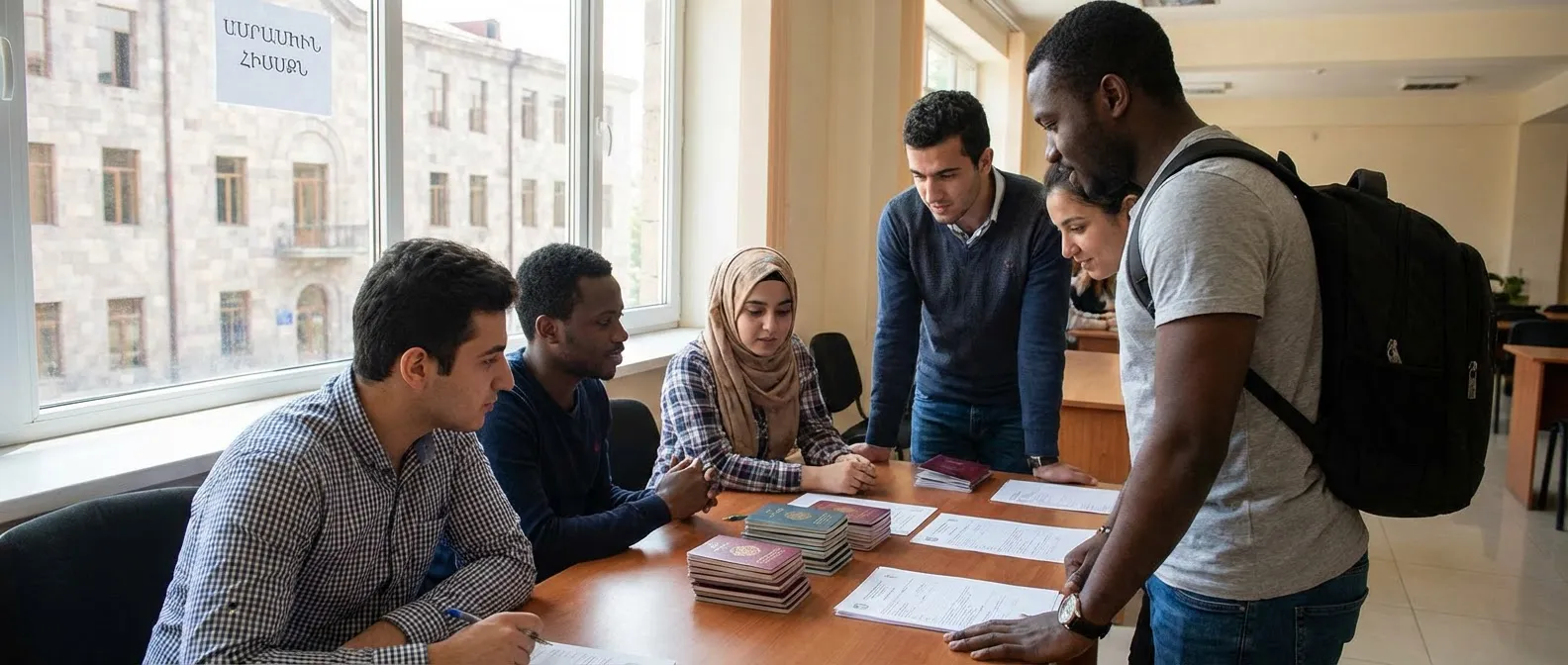
Whether you need a V-4 visa depends on your citizenship. Citizens of visa-free countries enter Armenia with a valid passport and apply for a residence permit directly upon arrival. Citizens of non-exempt countries must obtain the V-4 visa before arrival. Arriving at Zvartnots International Airport or land border crossings without the correct entry document results in immediate denial of entry or deportation.

Visa-Free Entry for Students
Citizens of visa-free countries skip the V-4 visa application entirely and travel to Armenia on a valid passport. If your study program exceeds 180 days per year, you must still apply for a Temporary Residence Permit after arrival, regardless of visa-free status.
Countries eligible for visa-free entry include:
- 🇷🇺 Russia,
- 🇧🇾 Belarus,
- 🇰🇿 Kazakhstan,
- 🇰🇬 Kyrgyzstan,
- 🇹🇯 Tajikistan,
- 🇺🇿 Uzbekistan,
- 🇲🇩 Moldova,
- 🇪🇺 all European Union member states,
- 🇺🇸 United States,
- 🇬🇧 United Kingdom,
- 🇦🇺 Australia,
- 🇳🇿 New Zealand,
- 🇸🇬 Singapore,
- 🇰🇷 South Korea,
- 🇦🇪 United Arab Emirates,
- 🇶🇦 Qatar,
- 🇬🇪 Georgia,
- 🇺🇦 Ukraine.
Visa on Arrival and E-Visa Options
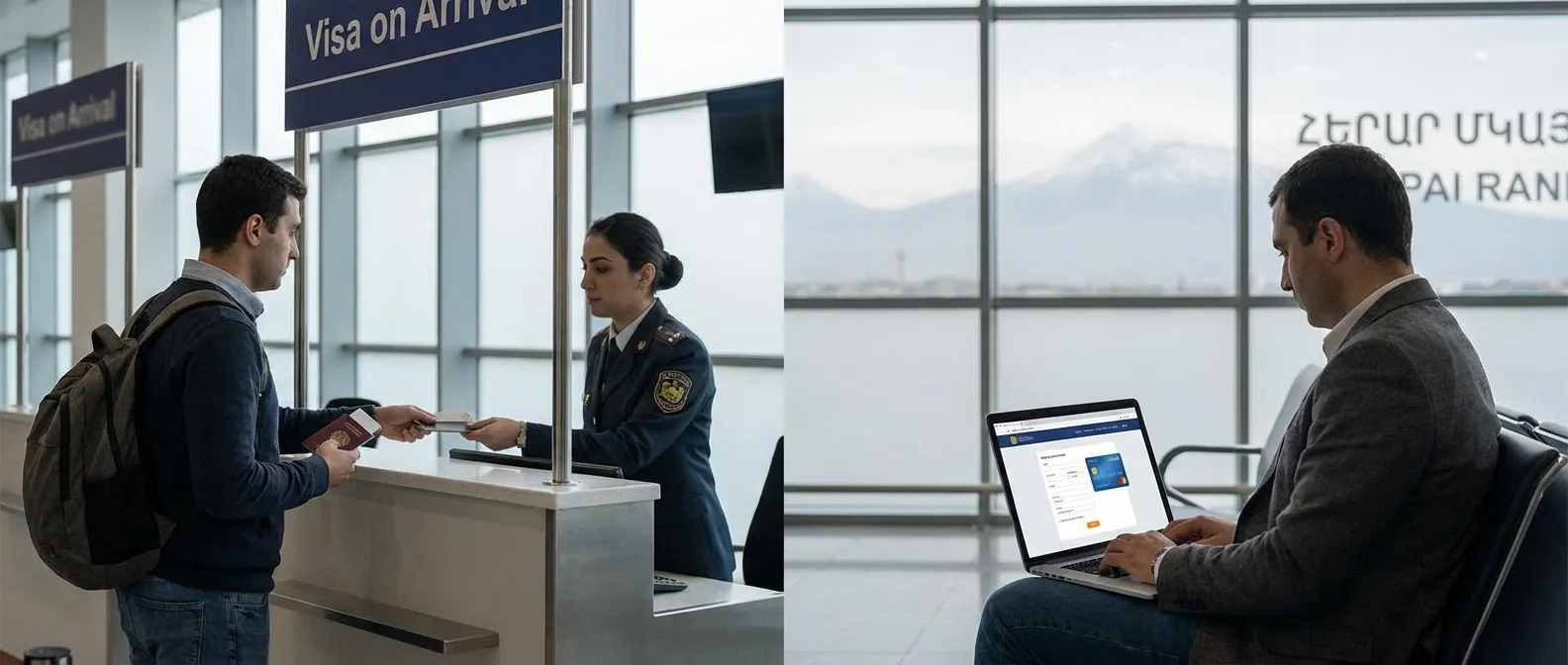
Students from non-visa-free countries eligible for simplified procedures can use Armenia’s E-Visa (processed online via the MFA portal, delivered as a PDF within 3 business days) or Visa on Arrival at border points. Both are valid for 120 days. Students pursuing full degree programs should confirm whether their entry status can be converted to a residence permit without exiting Armenia.
- Visa on Arrival: available at border control points like Zvartnots Airport; generally recommended for short-term visitors (up to 120 days). Students planning full degrees should verify if this status can be converted to a residence permit without exiting the country,
- E-Visa: issued for 120 days and serves as a valid entry document for students. You must print the E-Visa and present it along with your acceptance letter at the border,
- Processing Time: E-Visas typically take 3 business days to process.

Countries That Require an Invitation for a Student Visa
Citizens of certain African and Asian countries must obtain a university-issued invitation before applying for any visa. The university submits the invitation to the Migration and Citizenship Service via the Visa Invitation Submission Portal. Security checks by the National Security Service take 2–3 weeks, after which the student receives an approval code to apply at the nearest Armenian Embassy or Consulate.
The process for invitation-required countries involves:
- the student applies to the university and pays the admission fee,
- the university submits the invitation request to the MFA and Police,
- the authorities conduct a security check (taking 2–3 weeks),
- once the invitation is approved, the student receives a code to apply for the visa at the nearest Armenian Embassy or Consulate.
Temporary Visa Exemption Period (January–July 2026)
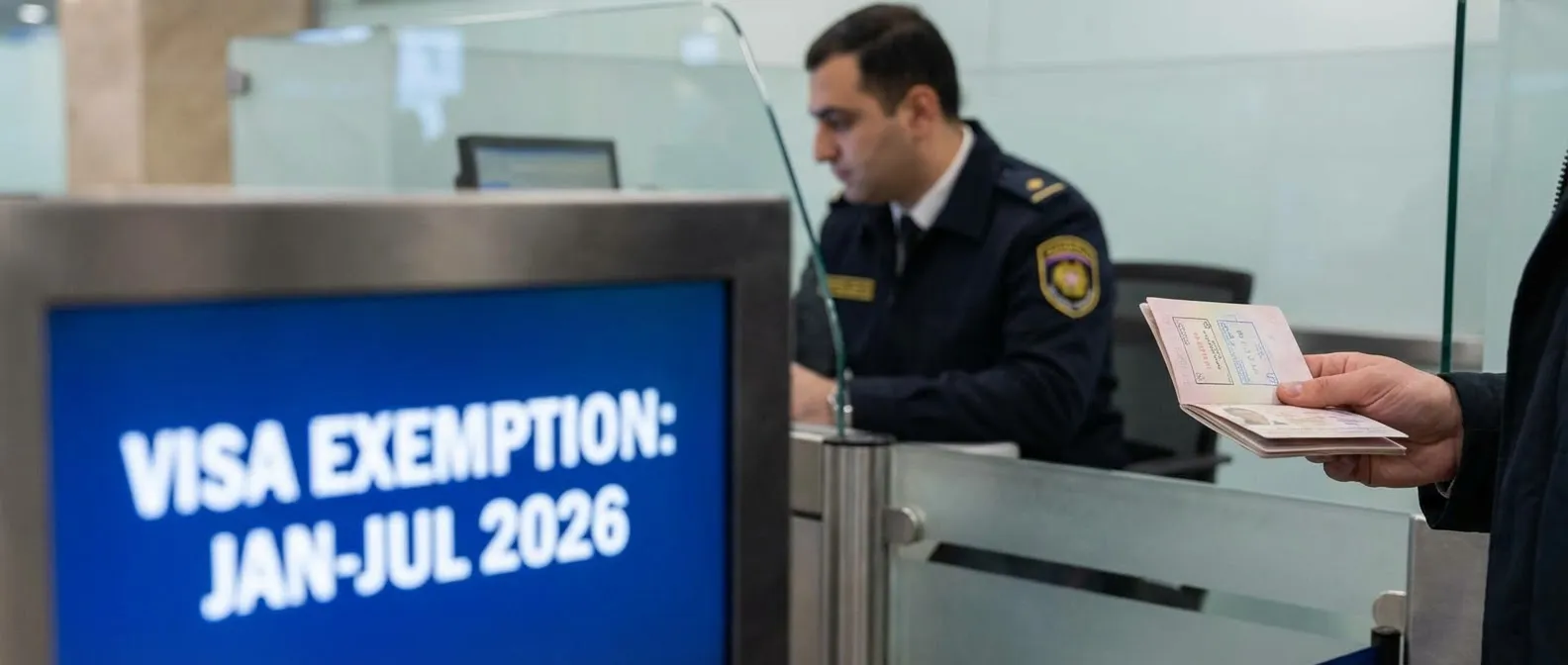
From January to July 2026, Armenia’s temporary exemption window allows students from invitation-required countries to apply for an E-Visa without prior invitation approval. To qualify, students must upload a validated enrollment confirmation from a ministry-approved university. This measure reduces consular backlogs before August 2026 state duty fee increases and mandatory biometric controls take effect.
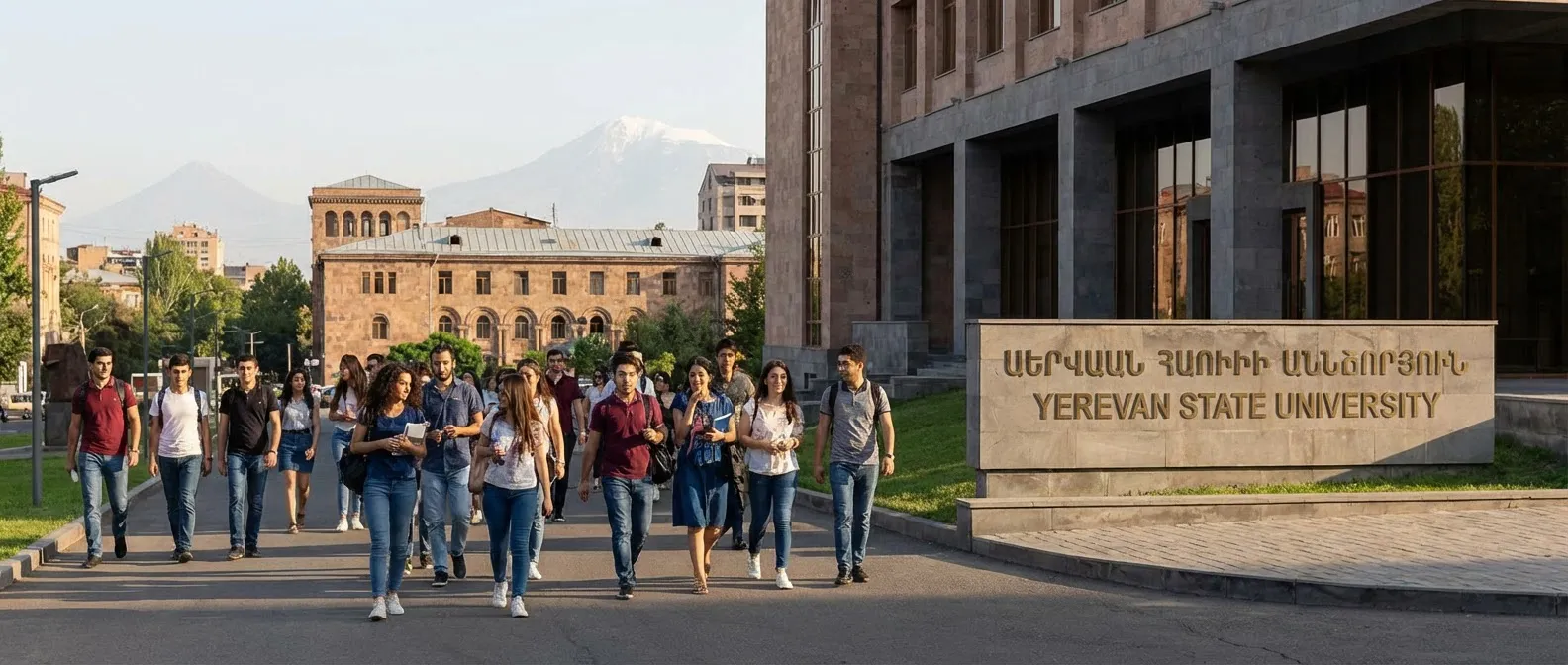
Eligible Educational Institutions in Armenia
Your institution must appear in the Ministry of Education, Science, Culture and Sports (MoESCS) accreditation database. Enrollment in an unaccredited private language center or unlicensed college results in automatic visa and residence permit rejection.
Types of eligible institutions include:
- state universities (public),
- interstate/international universities (established by intergovernmental agreements),
- accredited private universities,
- research institutes (e.g., Matenadaran),
- international schools (for minors).
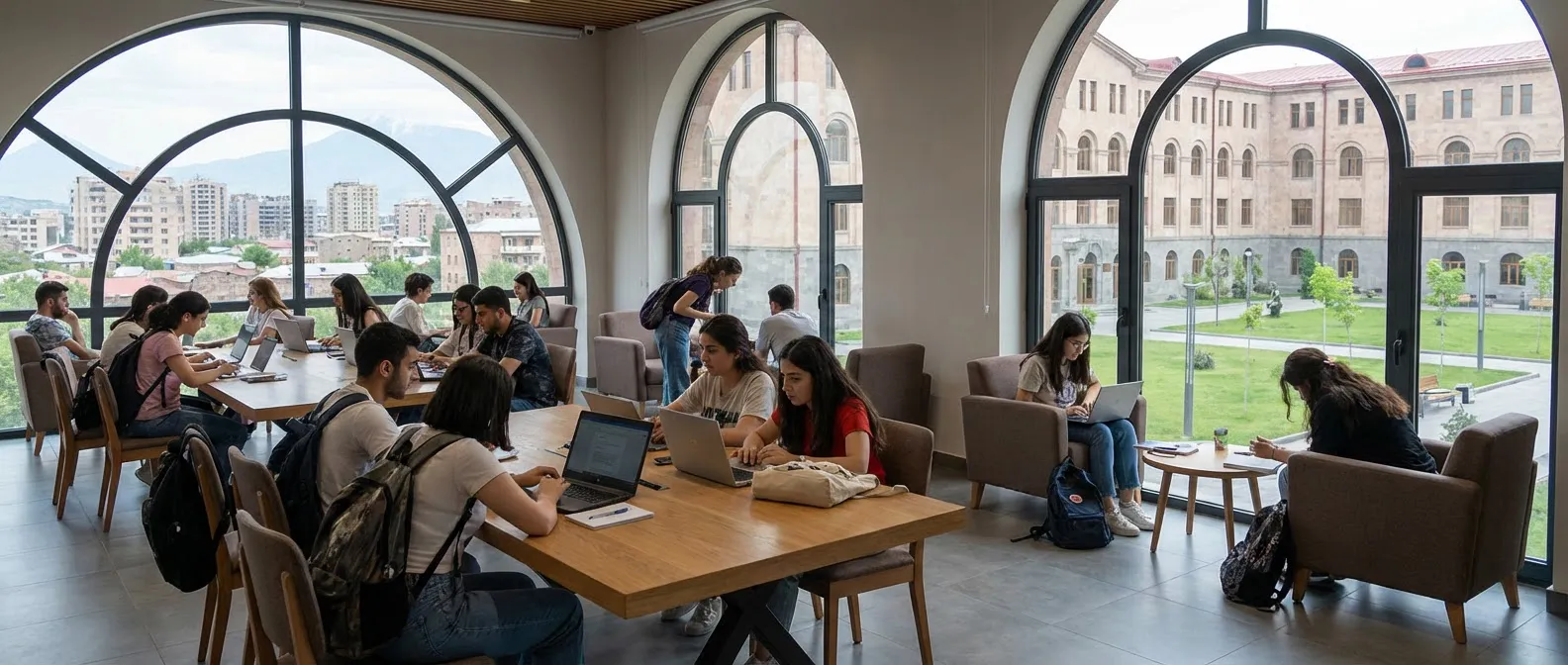
Top Universities for International Students
Armenia’s most internationally recognized universities for V-4 visa purposes span a wide range of disciplines and academic traditions. Key institutions include:
- Yerevan State University (YSU): the oldest and largest university, offering the widest range of programs,
- American University of Armenia (AUA): US-accredited institution offering degrees in Business, Engineering, and Data Science,
- Yerevan State Medical University (YSMU): highly popular for medical students, particularly from India and Sri Lanka,
- Russian-Armenian University (RAU): offers programs in Russian and English, strong in law and politics,
- French University in Armenia (UFAR): collaborates with Jean Moulin Lyon 3 University, offering dual degrees.
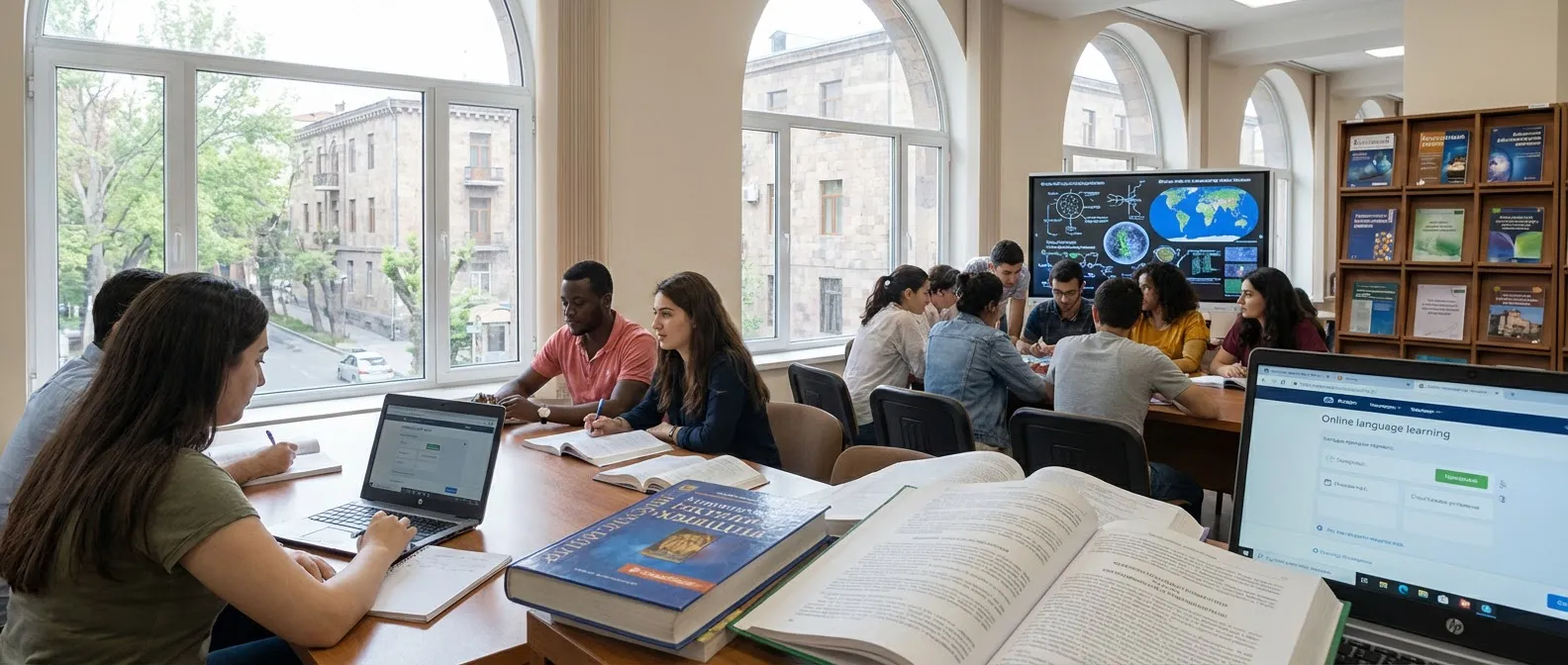
Academic Disciplines and Language Programs Available
Medicine (6-year English-language programs) is the most common field for international students, but the V-4 visa also covers a broad range of other disciplines. Popular fields include:
- Medicine and Dentistry: the dominant field for foreign students, with 6-year programs in English,
- Computer Science and Engineering: growing rapidly due to Armenia’s expanding tech sector,
- Business and Economics: offered widely at AUA and the French University,
- Armenian Studies: history, linguistics, and archaeology,
- Language Programs: intensive courses in Armenian, Russian, French, and English at accredited institutions.
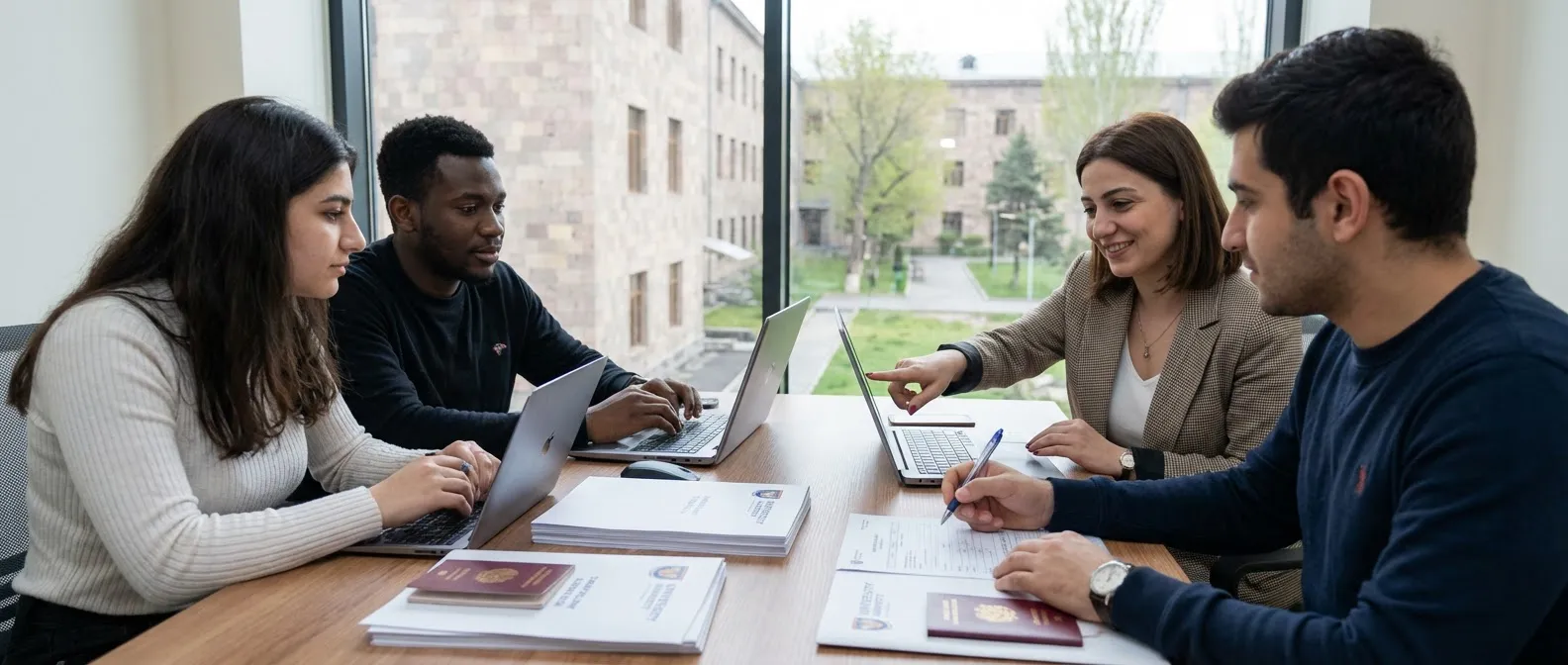
University Admission Process for Foreign Students
Foreign students bypass Armenia’s national entrance exams. Admission is based on high school transcripts and an interview (plus Biology and Chemistry entrance exams for medical schools). You must complete the following steps before receiving the acceptance letter required for your visa application:
- Application Submission: submit your application form, passport copy, and educational documents to the university’s international department,
- Document Verification: the university verifies your documents; for medical schools, this may involve an entrance exam in Biology and Chemistry,
- Contract Signing: once accepted, you sign a study contract,
- Tuition Payment: pay the tuition fee (or a portion of it) to receive the official Acceptance Letter,
- Ministry Ratification: the university submits your file to the Ministry of Education for final approval.
Armenia Student Visa Document Checklist
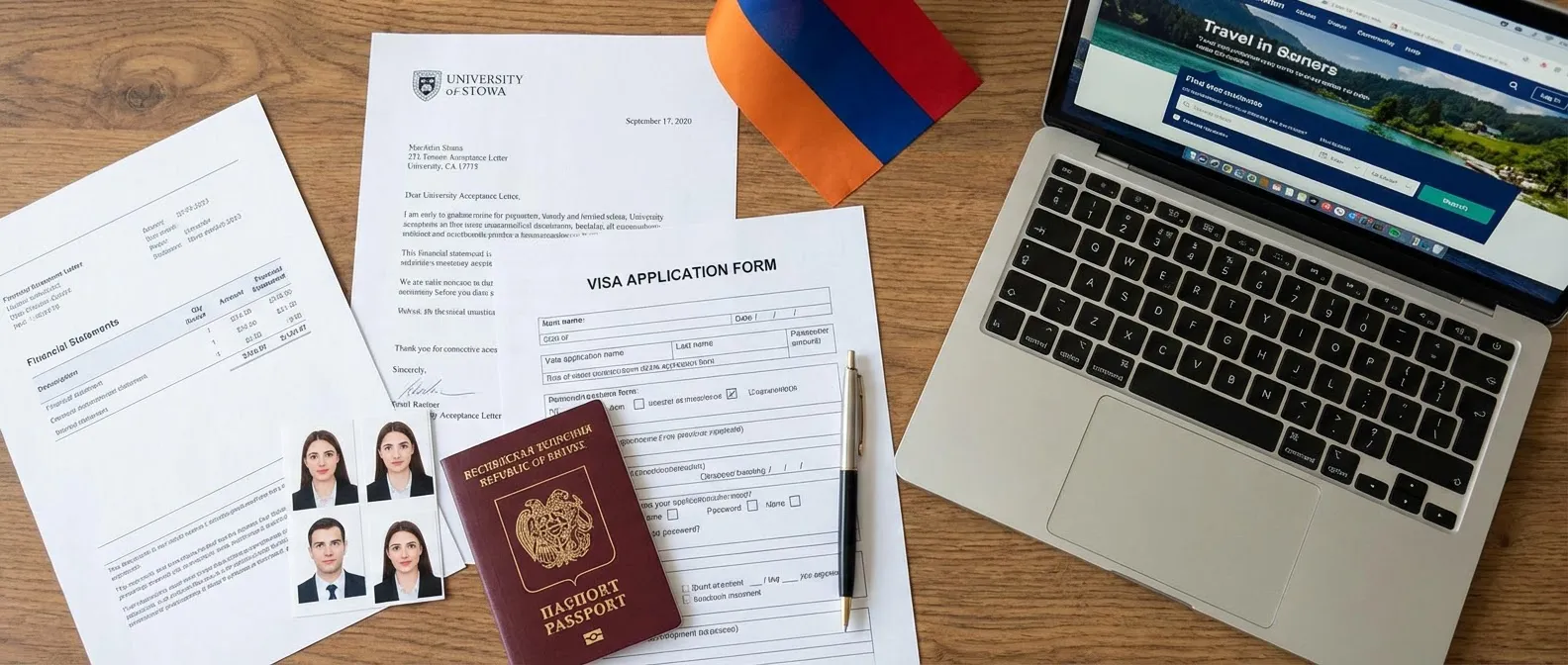
Incomplete documentation is the leading cause of V-4 visa rejection. All foreign documents must be translated into Armenian or English and notarized. Required documents include:
- Valid Passport: must be valid for at least one year beyond the intended date of entry,
- Visa Application Form: completed and signed (or filled online),
- Passport-sized Photographs: recent, color photos (3.5 × 4.5 cm),
- Letter of Acceptance: official document from the educational institution confirming enrollment,
- Proof of Financial Support: bank statements or a financial guarantee letter proving you can cover living costs and tuition,
- Health Insurance: valid medical insurance covering the full duration of the visa,
- Invitation Number: (if applicable) the code received from the MFA.
How to Apply for an Armenia Student Visa Step by Step
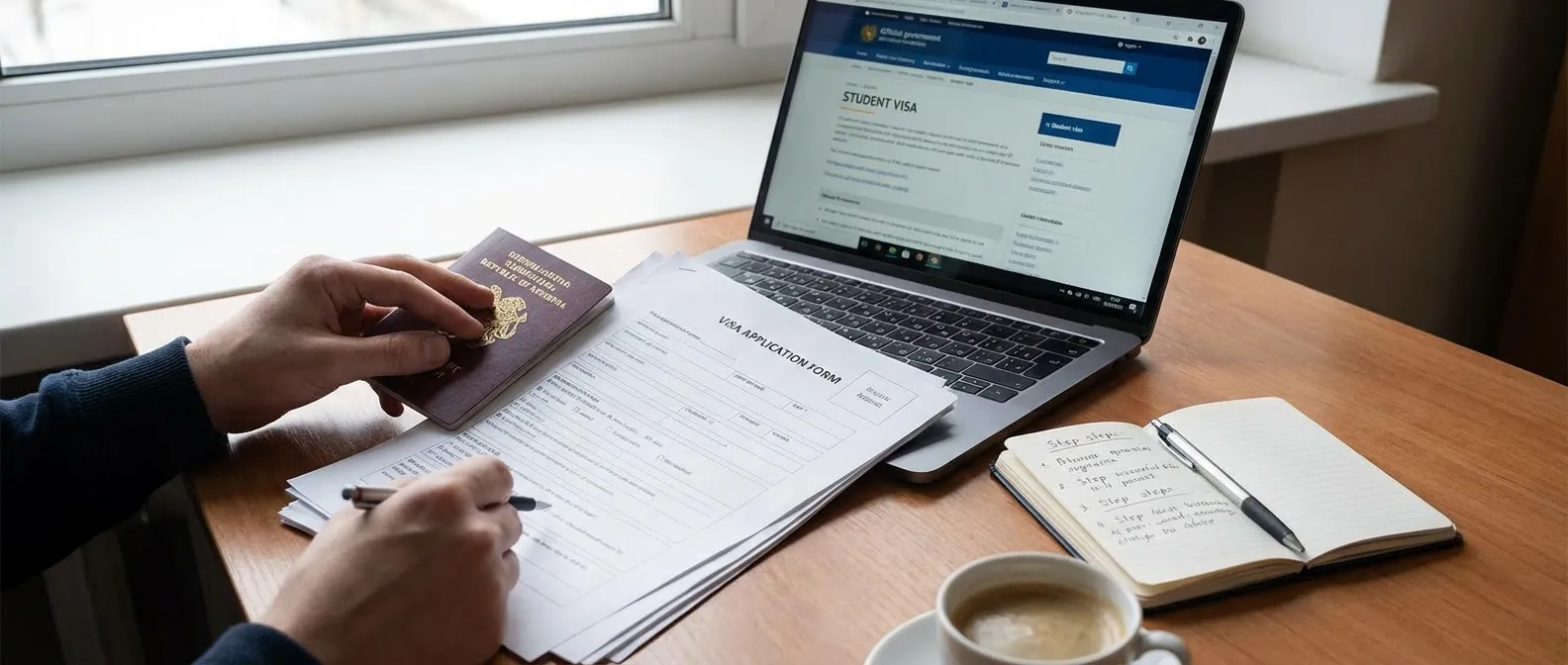
The V-4 visa application follows 6 steps regardless of whether you apply via the E-Visa portal or at an Armenian embassy. The critical first step is securing your university acceptance letter — no visa application can proceed without it.
- Secure Admission: obtain your official acceptance letter and study contract from the university,
- Check Visa Requirement: determine if you need an invitation, an E-Visa, or a sticker visa from an embassy,
- Submit Application: for an E-Visa, visit the official E-Visa portal, upload documents, and pay the fee; for an Embassy Visa, book an appointment at the nearest Armenian diplomatic mission,
- Pay Consular Fees: pay the non-refundable visa application fee,
- Wait for Processing: monitor your application status via the tracking system,
- Receive Visa: once approved, receive your E-Visa via email or collect your passport with the visa sticker.
Visa Application Form and Online Submission
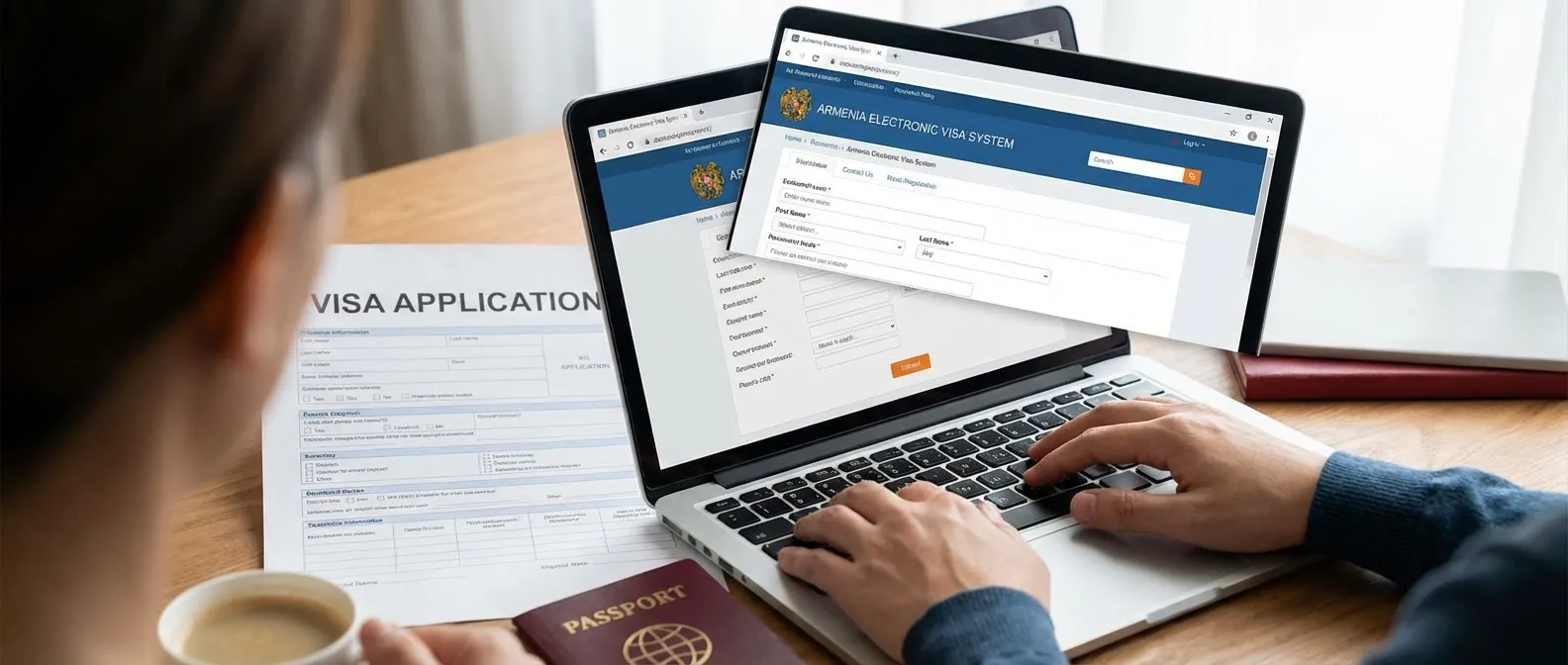
On the E-Visa portal or embassy form, select „Study” as your purpose of visit — not „Tourism.” Selecting the wrong category creates legal complications when converting your visa to a residence permit. All data must match your passport exactly. Save the reference number generated after submission for application status tracking.

Consular Fees and Payment Methods
Visa fees are set by Armenia’s Law on State Duty and will increase significantly from August 2026. Current standard fees are approximately 3,000 AMD for visas up to 21 days and 15,000 AMD for visas up to 120 days.
| Visa Type | Fee | Payment Method |
|---|---|---|
| Visitor Visa (up to 21 days) | ~3,000 AMD | Online, embassy, or border |
| Visitor Visa (up to 120 days) | ~15,000 AMD | Online, embassy, or border |
| Official/Diplomatic Visas | Often exempt | N/A |
Payment is accepted online via Visa, MasterCard, or ArCa on the E-Visa portal; by bank transfer or cash at embassies; and by cash (AMD) or card at border control points.

Visa Processing Times and Validity Period
The V-4 student entry visa is valid for 120 days — sufficient to enter Armenia and apply for your residence permit, but not valid for the full duration of your studies. Processing times vary by application method:
- E-Visa: typically 3 business days,
- Embassy Visa: can take 10 to 15 business days, depending on workload,
- Invitation Approval: if an invitation is required, add 2–3 weeks for the security check by the National Security Service and Police.
How to Extend a Student Visa in Armenia
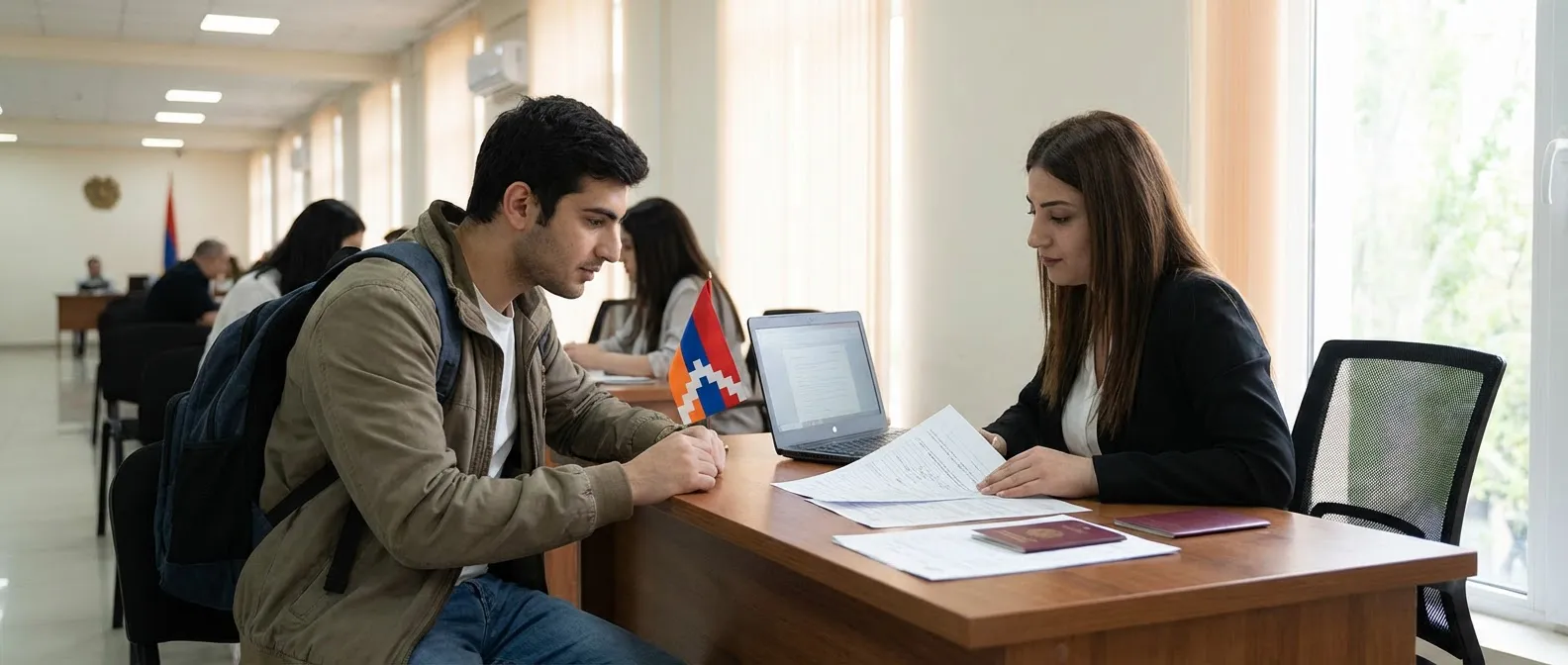
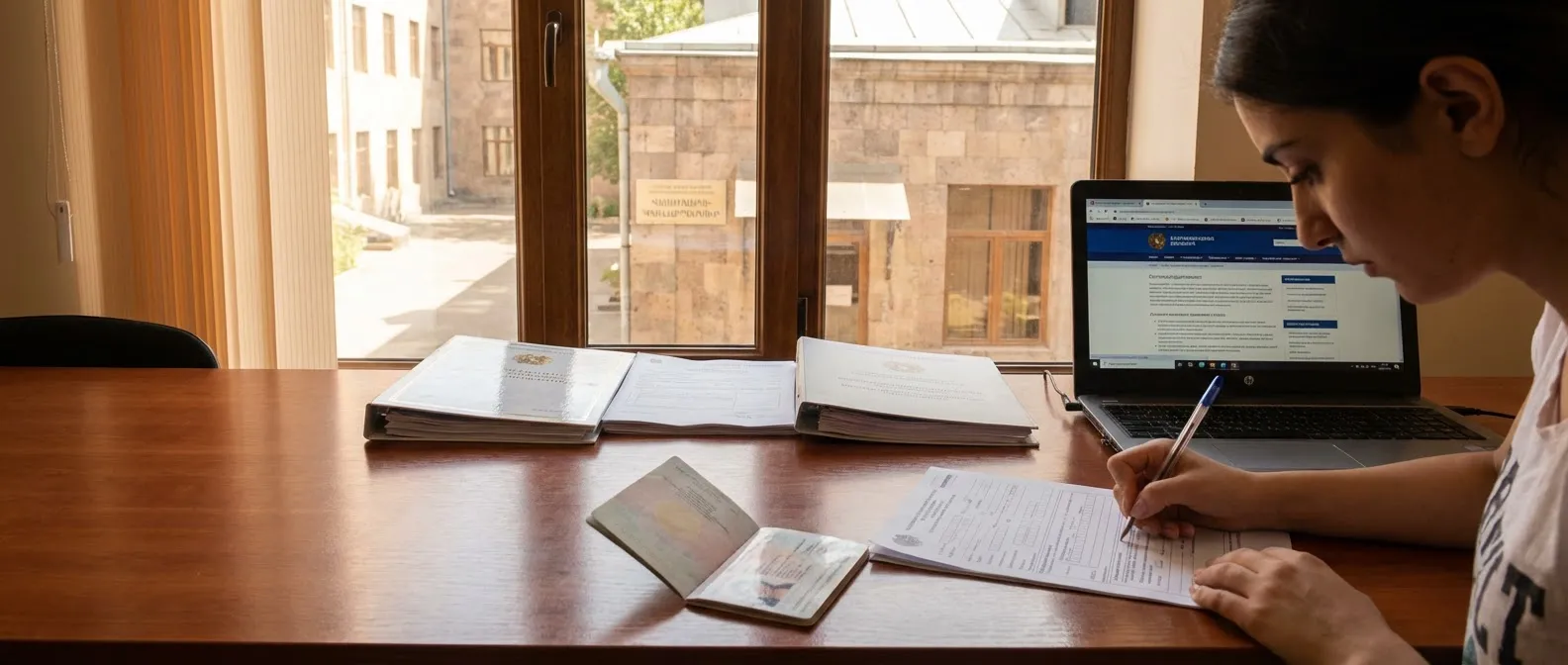
If your residence permit is not issued before your 120-day visa expires, apply for a visa extension at the Passport and Visa Department of the RA Police in Yerevan. Extensions are granted for up to 60 days with documented justification (e.g., university paperwork delays). Overstaying without an extension or pending permit application results in fines and potential re-entry bans of 1–3 years.
Student Temporary Residence Permit: Requirements and Application
The Temporary Residence Permit (TRP) replaces your visa and grants legal residency for 1 year, renewable annually. Apply at the Migration and Citizenship Service (MCS). Required documents include:
- Application Form: filled out at the MCS office,
- Passport: original and copies (including the entry visa stamp),
- Medical Certificate: confirming you are free from specific infectious diseases,
- University Reference: a document confirming active student status (Order of Enrollment),
- Photos: 3×4 cm biometric photos,
- State Duty Payment: receipt of payment for the permit issuance.
Medical Examination for Residence Permit
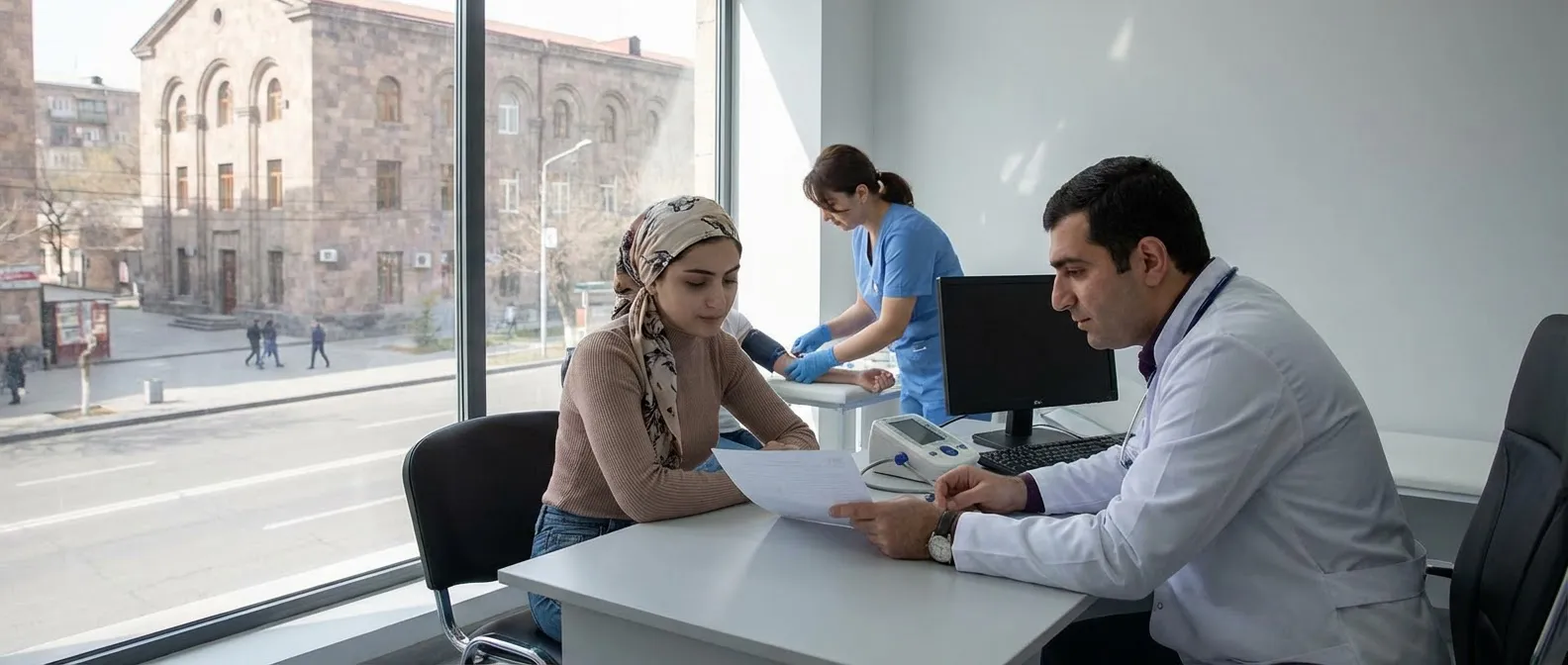
A health certificate from a licensed Armenian clinic is mandatory for TRP approval. The certificate must confirm you are free from tuberculosis, HIV/AIDS, and other infectious diseases listed by the Ministry of Health, and must be issued within 30 days of your TRP application. YSMU and other medical universities have pre-arranged clinic partnerships to streamline this process for their students.
Document Legalization: Apostille, Consular Legalization, and Translation
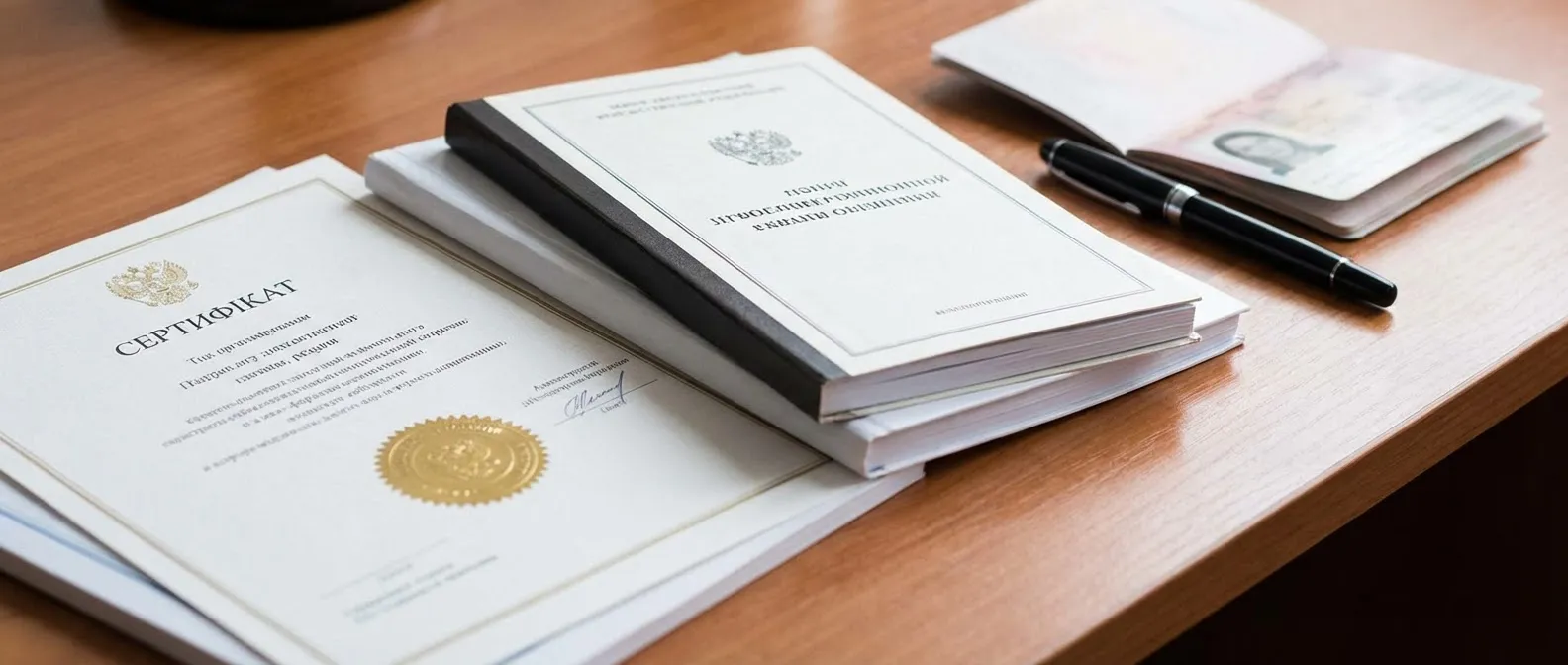
Your educational documents (diploma, transcripts) must be legally recognized in Armenia before admission and residency applications are processed. Legalization methods include:
- Apostille: if your country is a member of the Hague Apostille Convention, your documents must bear an Apostille stamp,
- Consular Legalization: if your country is not a Hague member, documents must be legalized by the Ministry of Foreign Affairs in your home country and then by the Armenian Embassy,
- Translation: all foreign documents must be translated into Armenian by a licensed translator and notarized by an Armenian notary.

Residence Permit Fees, Processing Time, and Renewal
The TRP takes 30–45 days to process and is valid for 1 year. Renewal applications must be submitted at least 30 days before expiration to avoid penalties. Starting August 2026, state duty fees for residence permits will increase significantly as part of Armenia’s immigration reform package. Key details:
- Processing Time: typically 30 to 45 days,
- Validity: issued for 1 year,
- Renewal: must apply at least 30 days before expiration; late applications can lead to penalties,
- State Duty Fee Changes (August 2026): fees for residence permits are scheduled to increase significantly as part of the immigration reform.
183-Day Absence Reporting Rule After August 2026
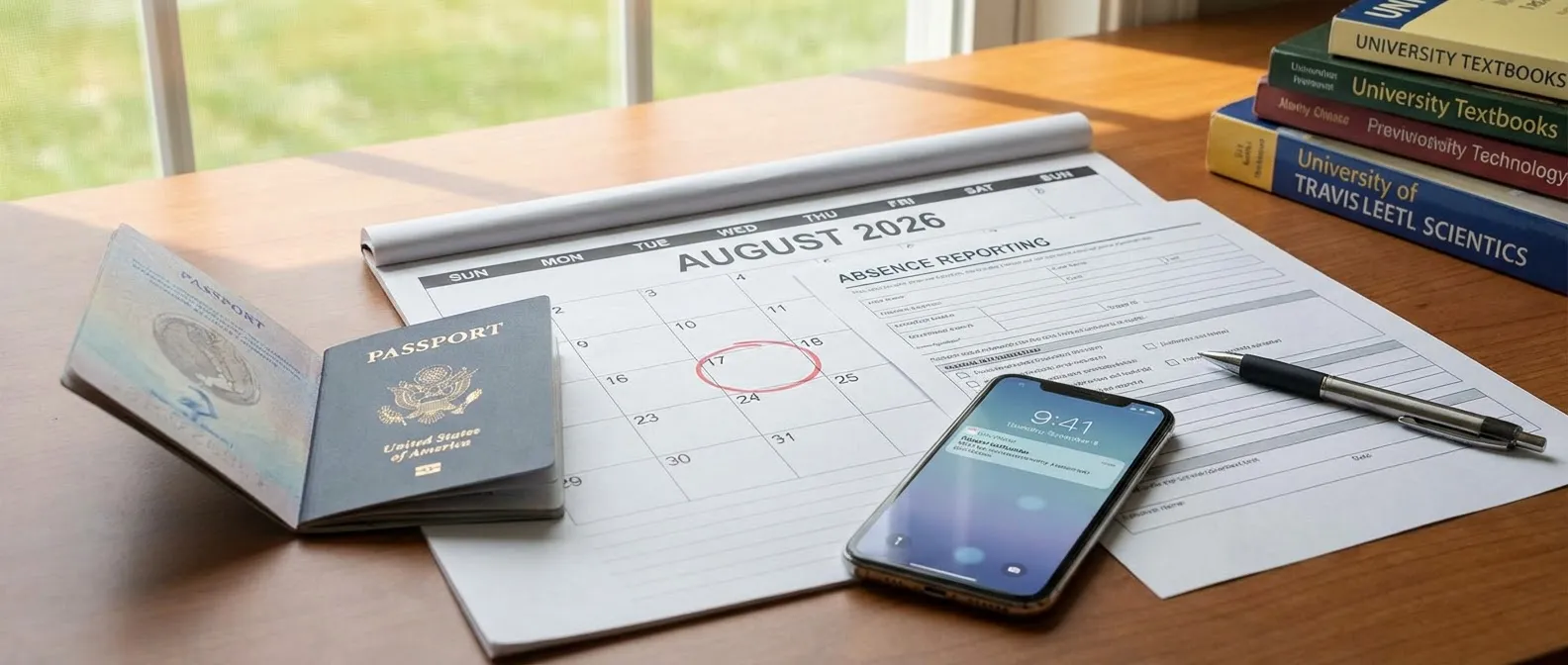
From August 2026, TRP holders absent from Armenia for more than 183 days within a calendar year must provide documented justification to the Migration and Citizenship Service — such as proof of an exchange program or research abroad. Unjustified absences exceeding 183 days result in residence permit revocation.
Address Registration and Social Security Number for Students
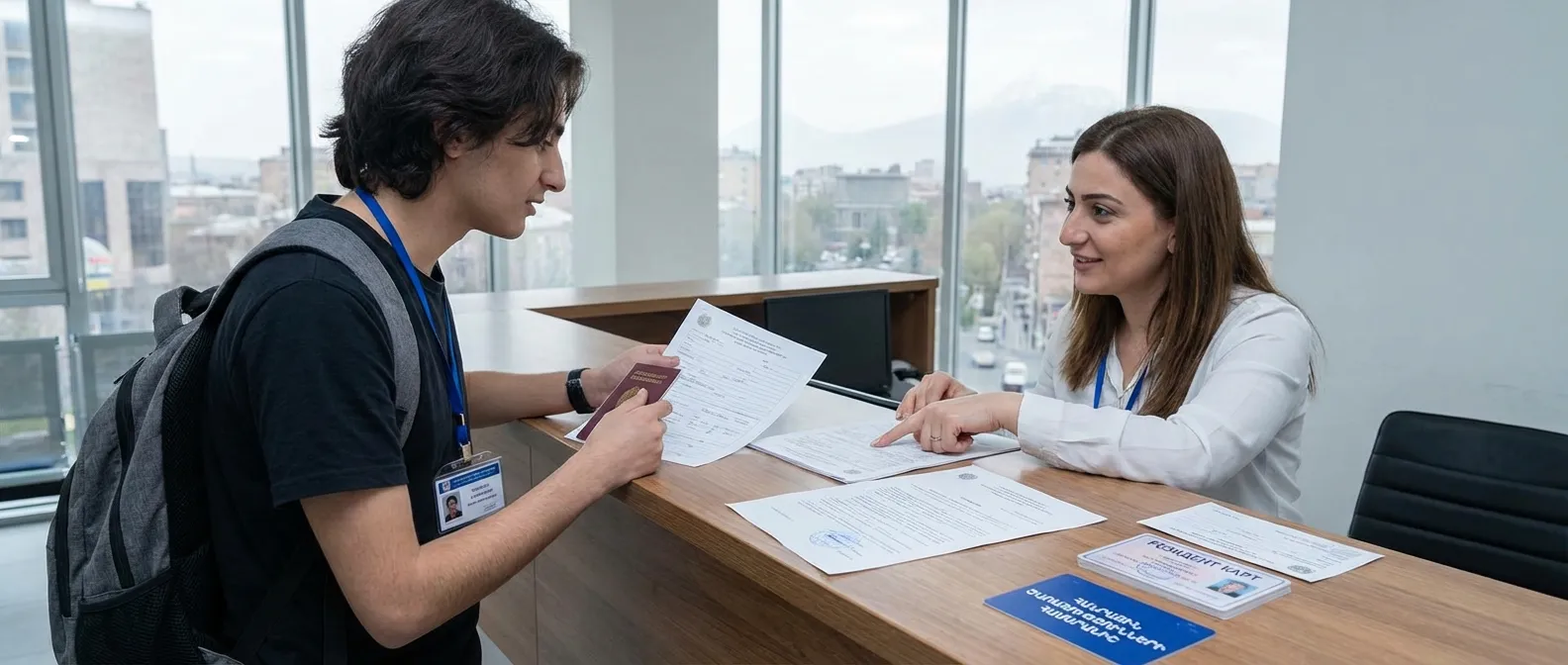
Upon receiving your TRP, you must complete address registration (propiska) with the local police or community office, registering your legal living address in Armenia. You will also be issued a Social Security Number (SSN) or Public Services Number (PSN), required for opening bank accounts, signing utility contracts, and accessing healthcare. Both registrations are mandatory for legal daily life in Armenia.
If you are planning a trip to the Caribbean and need travel documentation, don’t forget that visitors to Aruba must complete the ED Card Aruba before arrival — a simple online process that ensures a smooth entry to the island.

Can You Work on an Armenia Student Visa?
International students in Armenia may work part-time under their TRP, which typically functions as a work permit — exempting employers from obtaining a separate work authorization. A legal employment contract is required. Post-2026 reforms will introduce stricter attendance monitoring to prevent full-time work from replacing academic participation.
- Part-time Work: students are generally allowed to work part-time,
- Work Permit: in many cases, the student residence permit acts as a work permit, exempting the employer from obtaining a separate work permit for the student,
- Contracts: you must have a legal employment contract,
- Post-2026 Reforms: new laws may introduce stricter monitoring to ensure students are not working full-time at the expense of their attendance.

Armenia Student Visa vs Tourist Visa: Key Differences
The V-4 student visa and V-1 tourist visa are not interchangeable. Entering on a tourist visa and attempting to study long-term creates legal complications when applying for a student residence permit. The V-4 is the only visa class convertible to a student TRP and the only one that grants work rights.
| Feature | Student Visa (V-4) | Tourist Visa (V-1) |
|---|---|---|
| Purpose | Academic study, research | Tourism, visiting family |
| Validity | 120 days (convertible to TRP) | 21 or 120 days (usually non-convertible) |
| Extension | Extendable for study reasons | Strict extension limits |
| Work Rights | Allowed (with TRP) | Not allowed |
Student Visa vs Residence Permit: Which Do You Need?
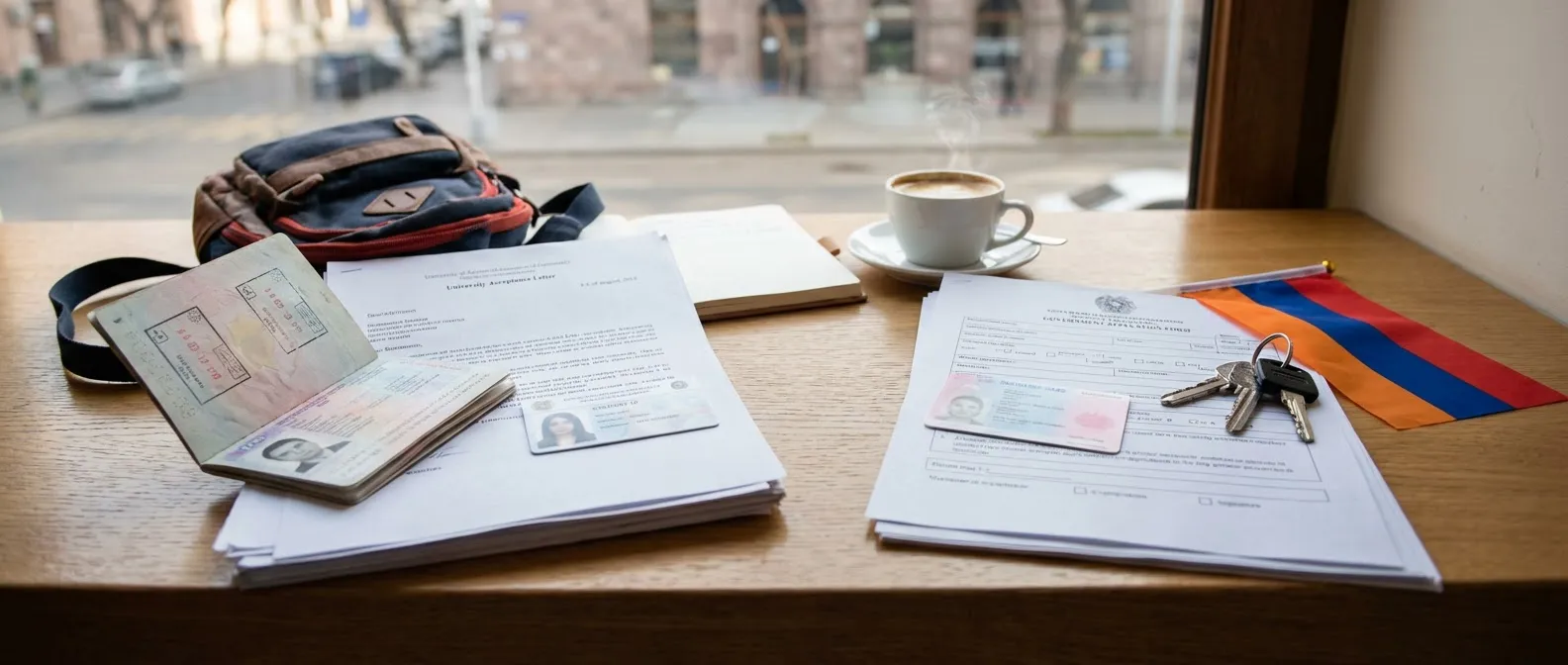
You need both, at different stages. The V-4 Student Visa is your entry permission — it allows you to cross the border legally for study purposes. The Temporary Residence Permit is your stay permission — the physical plastic card proving legal status for each academic year. You must convert your visa to a TRP within the first few months of arrival; a visa alone cannot sustain a 4-year degree program.

Scholarships for International Students in Armenia
Three main funding sources are available for international students in Armenia:
- Government Scholarships: the Armenian government offers scholarships based on bilateral agreements with countries like China, Romania, and Jordan,
- University Scholarships: institutions like AUA and YSU offer merit-based aid,
- International Programs: Erasmus+, DAAD, and AGBU (Armenian General Benevolent Union) provide significant funding for exchange students and diaspora Armenians.

Cost of Living in Armenia for Students
Yerevan is affordable by European standards, with total monthly student expenses typically ranging from $490 to $930. Estimated monthly expenses include:
- Accommodation: dormitories (cheaper) or shared apartments ($300–$600); YSU dormitory prices are among the most budget-friendly,
- Food: $150–$250; specialized services like Indian food arrangements are available near medical universities,
- Transport: very affordable — the underground metro costs 100 AMD ($0.25) per ride; buses and minibuses (marshrutkas) are similarly priced; Yandex Taxi and GG are popular ride-hailing apps,
- Utilities: $40–$80 depending on the season (heating in winter).

Family Reunion Visa and Residence Permits for Family Members
Graduate students and researchers holding a valid TRP can bring spouses and children to Armenia under family reunion provisions. Family members must submit legalized and translated proof of family ties (marriage certificate, birth certificates). Their residence permits will match the duration of the student’s permit.

Post-Graduation Residence Options in Armenia
Your student TRP expires at graduation. To maintain legal status, you must transition to a work permit by securing employment or register as an Individual Entrepreneur before your student permit expires. The 2026 immigration reforms aim to simplify this transition for STEM graduates. No dedicated job-seeker visa currently exists.
Pathway to Armenian Citizenship for Students
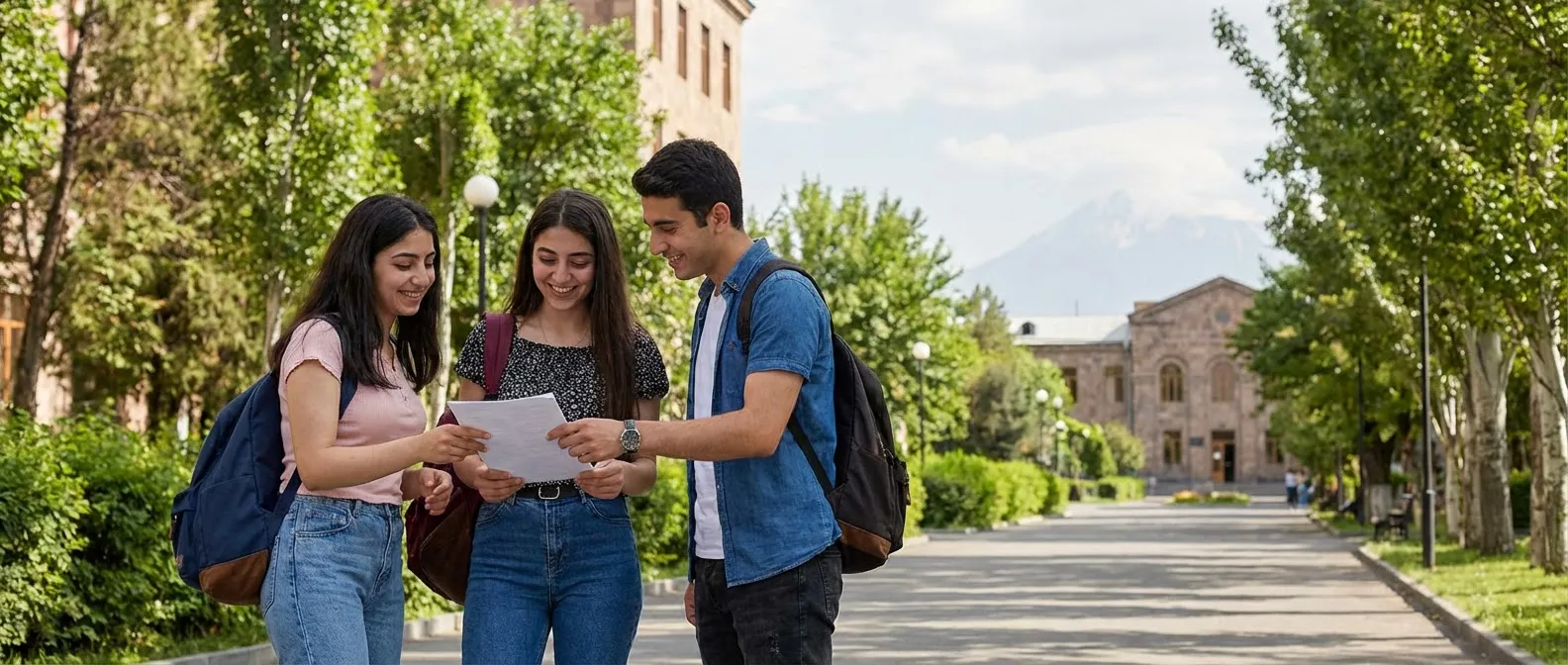
Years spent in Armenia on a legal residence permit count toward the naturalization requirement. Standard citizenship by residence requires 3 years of permanent legal residency plus demonstrated knowledge of the Armenian Constitution and language. Ethnic Armenians (diaspora) qualify for immediate citizenship under a simplified procedure, bypassing the residency requirement entirely.

2026 Immigration Reforms: What Students Should Know
Armenia’s 2026 immigration reforms introduce four major changes affecting all international students:
- Biometric Residence Cards: mandatory issuance of biometric cards with enhanced security features,
- Electronic Application Platform: full transition to an electronic residence permit application platform to reduce paperwork,
- State Duty Fee Increase: significant hike in fees for visas and permits starting August 2026,
- Stricter Attendance Monitoring: universities will be required to report student attendance more rigorously to the MCS.
Overstay Penalties and Residence Permit Revocation Conditions
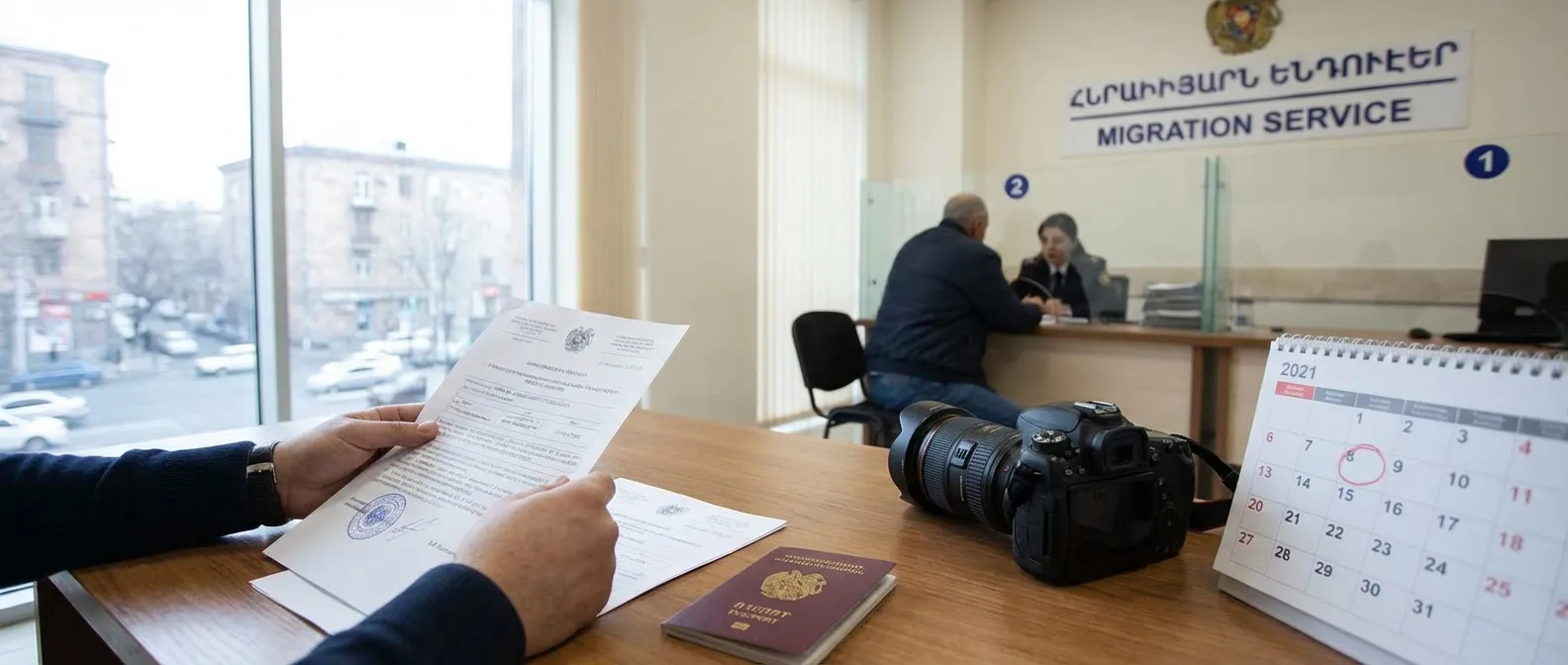
Overstaying your visa results in fines of 50,000–100,000 AMD and a re-entry ban of 1–3 years. Your residence permit will be revoked under the following conditions:
- expulsion from the university,
- failure to pay tuition fees leading to contract termination,
- providing false documents during application,
- absence from Armenia for more than 183 days without justification (post-August 2026 rule).
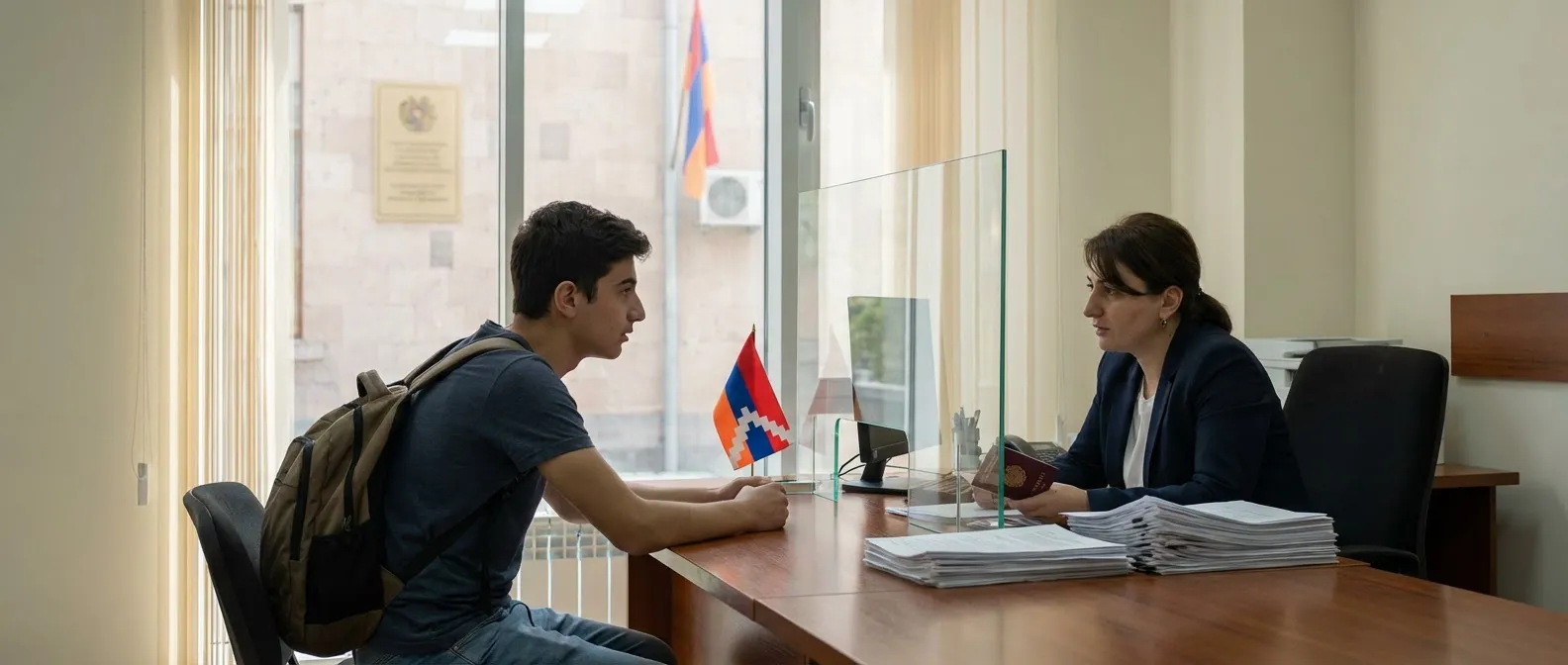
Embassies, Consulates, and Contacts for Student Visa Inquiries
For official and legally binding information, use only government sources. Key contacts include:
- Ministry of Foreign Affairs of Armenia: for visa policy and E-Visa issues,
- Migration and Citizenship Service (MCS): for residence permits and refugee issues,
- Passport and Visa Department of RA Police: for extensions and address registration,
- Armenian Embassy: contact the embassy in your home country for specific consular reception hours and country-specific requirements.
Traveling internationally requires careful preparation. If Aruba is on your itinerary, make sure to complete the ED Card for Aruba online before your departure — it is a mandatory entry requirement for all visitors to the island.